
Choosing well on Kakobuy: sites, sellers, agents and listings
The five levers decide what an order costs. These four choices decide whether it was worth ordering, and a bad one costs more than any lever can save.
How to choose a spreadsheet site worth using
A spreadsheet site, in this sense, is a catalogue of product picks you can browse by category. Plenty exist, and they differ less in looks than in upkeep. Four checks separate a useful one from a stale one:
- Do the category links work today? Repeated dead links make discovery harder; check whether the site offers a useful alternative or correction route.
- Are figures dated? A shipping price or fee without a date is difficult to evaluate against current terms.
- Does it say who runs it and how to reach them?
- Does it tell you what it cannot know, or does every page sound certain?
Hold this site to the same test. Every figure here carries a read date, and the updates page lists what changed.
How to choose a seller on Taobao, Weidian or 1688
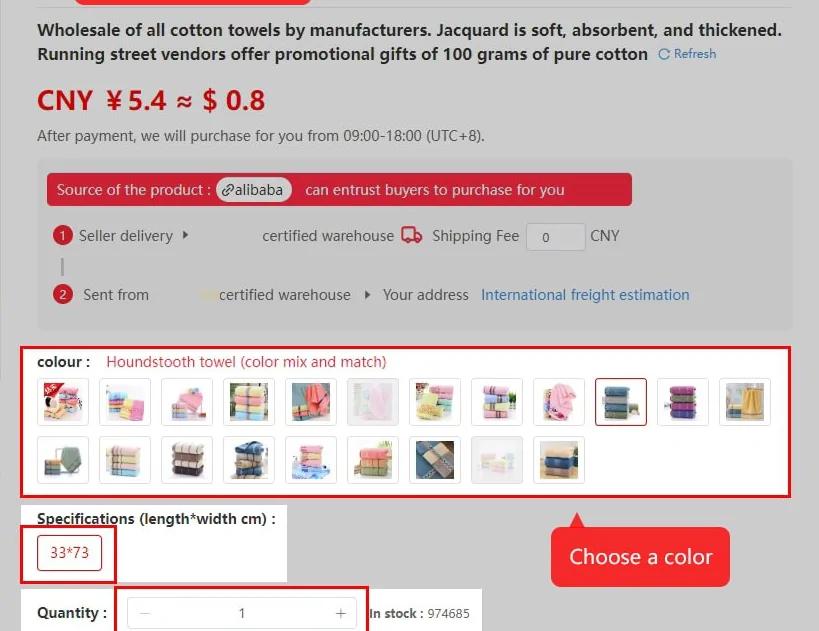
The product page Kakobuy shows after you paste a link carries most of what you need. Look for the source platform, the price in yuan with its approximate conversion, the variants, and on many listings a sales count and stock figure.
Signals worth weighing: a seller whose listing has real sales history and clear size charts; photos of the actual item rather than brand campaign images; specifications written out rather than left in images; and a domestic shipping fee that is stated, not left blank. Signals worth avoiding: prices far below the same item elsewhere, variants that do not match the photos, and listings that change title or price between visits.
None of these is proof. They shift the odds, and the QC photos are where you check the result.
What makes a trustworthy agent, judged by what it publishes
Trust in an agent comes from what it publishes and whether it sticks to it. A few things you can check on any agent's site, and that Kakobuy does publish:
- Named operating companies with addresses and a company number.
- Written storage terms, including what happens when time runs out.
- Written inspection scope, including what is not checked.
- Published fees for each add-on, and a refund rule for freight differences.
- A dated announcements page, so policy changes leave a trail.
Where official pages disagree, ask which current account or checkout term applies. Kakobuy's own pages disagree in places; we flag those where they touch a lever.
How to choose a product listing you will not regret
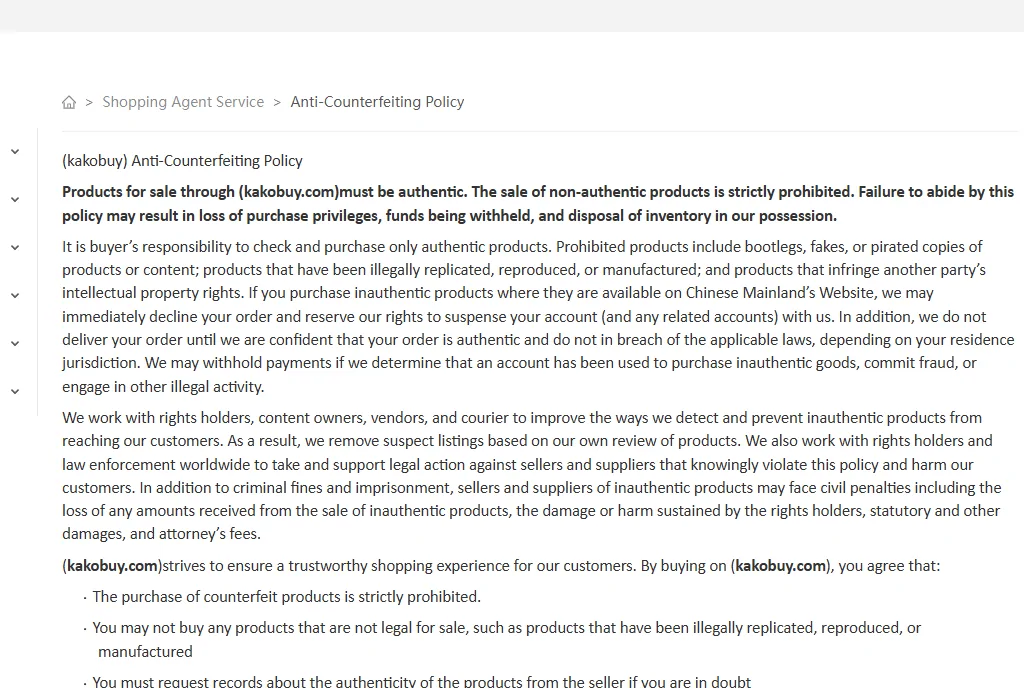
Kakobuy's anti-counterfeiting policy says products bought through the site must be authentic, that buying counterfeits is prohibited, and that the buyer is responsible for checking. It reserves the right to cancel orders and suspend accounts. Read it before you buy branded goods; it is short.
Beyond that, judging a listing before you order comes down to a few habits. Read the size chart in centimetres, not the size label. Check the weight if the listing gives one, since it feeds levers two and three. Prefer listings where the photos show the item on a plain background from several angles. And if a listing is from a platform Kakobuy's keyword search does not cover, remember that Fill and Buy orders carry no after-sales service.
Before you order: mistakes that cost more than any coupon
These are decisions where the cost or consequence deserves a separate check:
- Shipping each item without comparing an eligible combined quote. The US$16.48 illustration uses an old EMS tariff; it is not a guaranteed saving from waiting a week.
- Topping up by PayPal in small amounts. Each top-up adds US$0.30 on top of 3.5%.
- Ignoring line notes. A battery in a no-battery line, or an address without a house number on a German line, can mean a returned parcel and a second freight bill.
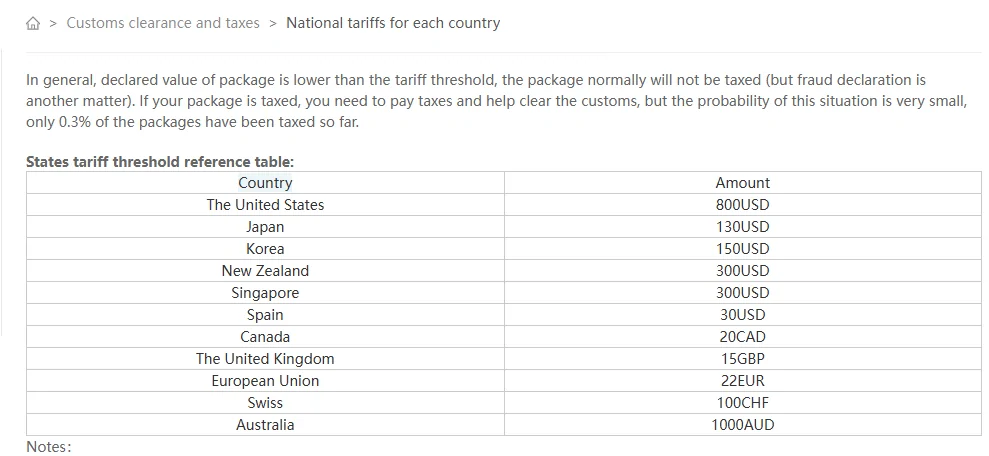
- Reading customs thresholds from an old table. The help centre's own threshold table still shows EU 22 EUR and UK 15 GBP and says the data was collected from the internet for reference only; use the destination’s current customs guidance and the selected route’s current terms.
- Missing the 120-hour return window after the Stocked in status because you did not look at the photos.
- Letting the 100-day storage clock run out on a slow consolidation.
Before committing, compare one eligible parcel with the alternatives. Waiting or combining everything is useful only when storage deadlines, returns and line restrictions still work.
Keep a small evidence trail
Before paying, keep the seller URL, selected variant, price, size chart and return terms. When warehouse photos arrive, compare them with that record. A changed listing or a vague memory is a poor basis for explaining a mismatch to support.